Taking place on October 16 each year, World Spine Day has become a focus in raising awareness of back pain and other spinal issues. With health professionals, exercise and rehabilitation experts, public health advocates, schoolchildren and patients all taking part, World Spine Day will be celebrated on every continent.
World Spine Day highlights the importance of spinal health and wellbeing. Promotion of physical activity, good posture, responsible lifting and healthy working conditions will all feature as people are encouraged to look after their spines and stay active.
With an estimated one billion people worldwide suffering from back pain, it affects all age groups, from children to the elderly. It is the biggest single cause of disability on the planet, with one in four adults estimated to suffer from back pain during their lives. Prevention is therefore key and this year’s World Spine Day will be encouraging people to take steps to be kind to their spines.
Populations in under-serviced parts of the world often have no access to conventional healthcare resources to care for spinal pain and disability. Often relying on traditional healers, even those who are seen in hospital are often only given anti-inflammatory medication. Dedicated spinal health professionals do not exist in many parts of the world, so education and self-help is key. Even in high-income countries, back pain afflicts many millions of people, resulting in an enormous impact on industry and the economy.
Organized by the World Federation of Chiropractic on behalf of the Global Alliance for Musculoskeletal Health, World Spine Day has over 500 official organizational supporters worldwide. More information about how to get involved is available at www.worldspineday.org on Twitter (@world_spine_day), Instagram (@worldspineday), and Facebook (https://www.facebook.com/WorldSpineDay2019/). Simply registering your support via the organisations page helps us to spread the word and help us keep you in touch with the latest events occurring worldwide!
More
A Healthy Diet Plan
Calcium
For bone, muscle and joint health try and include Calcium in your diet, which is essential for optimal nerve and muscle function and blood clotting.
Obtained from
Dairy products are rich in calcium that is easy to absorb. Non – dairy sources with equally absorbable calcium are green leafy vegetables from the kale family. Spinach, rhubarb, sweet potatoes and dried beans are rich in calcium but from these foods it’s not easily absorbed
Magnesium
Required for efficient muscle contraction and conduction of nerve impulses. Low magnesium levels in the body can affect the body’s calcium levels, putting bone health at risk.
Obtained from
Green leafy vegetables, unrefined grains and nuts. Small amounts are present in meat and milk. Large quantities of fibre in the diet and low protein intake can reduce the amount of magnesium able to be absorbed by the body.
Vitamin D
Essential for regulating the formation of bone and the absorption of calcium from the intestine. Vitamin D is a fat-soluble vitamin that functions to help control the movement of calcium between bone and blood.
Obtained from
Primarily from the action of UVB light on the skin. Food sources such as cod liver oil, sardines, salmon, tuna, milk and milk products contain small amounts of Vitamin D.
Vitamin C
The structure of bones, cartilage, muscles and blood vessels is provided in part and maintained by collagen. The formation of strong efficient collagen requires Vitamin C.
Obtained from
Citrus fruits, berries, tomatoes, cauliflower, potatoes, green leafy vegetable and peppers. Also important for producing strong collagen and therefore strong bone structure, is Folic acid. Folic acid is found in cereals, beans, green leafy vegetables, orange and orange juice
Antioxidants
Vitamin C is also a strong antioxidant and is capable of regenerating other antioxidants like vitamin E. The role of antioxidants is to mop up free radicals (the by-products of normal metabolism). Excessive amounts of free radicals cause damage to joint surfaces and muscle cell regeneration. Antioxidants reduce the potential of these free radicals to cause joint damage.
Obtained from
Antioxidants are vitamins A, C, E and the mineral selenium and are present in fruits and vegetables, the highest quantities are found in the most deeply and brightly coloured. Cartilage that lines the articulating surfaces of all joints is critical to joint health. Cartilage is the shock absorber of joints and is continually rebuilt if a source of raw materials is available. Supplements such as glucosamine sulphate can be added to a healthy diet to assist joints that maybe showing signs of wear and tear.
Essential fatty acids
Essential fatty acids (EFA’s) also reduce the degenerative changes in tissues and cells. EFA’s are unsaturated fatty acids such as Omega 3. They aid in decreasing the inflammatory response and help relieve pain and discomfort in joints and muscles.
Obtained from
EFA’s can be found in oily fish (sardines, fresh tuna, mackerel), flax seed and linseed.
Foods to avoid…
There are certain foods and substances that adversely effect the body’s use of minerals and vitamins. High saturated/animal fats, refined foods, white flour, white sugar, white rice, chocolate, carbonated drinks and fruit juices with high sugar concentration should be kept to a minimum if not weaned from the diet completely. Meat and dairy products should be kept within a recommended weekly amount. Dairy products as calcium sources should be varied with other non-dairy sources.
More
Try and adopt a sleeping position which creates less physical stress on the back. For example, lying on your side is better than lying on your front with your neck twisted to one side.
Keep moving and avoid being in any one position for too long.
No matter how comfy the position may initially feel, the longer you stay in one position, the more this will ‘load joints’. If your partner moves around a lot at night, try separate beds for a while as your partner’s movement could aggravate YOUR back condition!
Drink water. Keep well hydrated; dehydration can make muscles ache.
Don’t leap out of bed first thing in the morning. After you have woken up wake up, try some gentle stretches.
Wake up your body. Once up, avoid bending or doing anything sudden or strenuous until you back wakes up!
More
It is known that balance and co-ordination is controlled by several parts of the body, namely the eyes and the ears. These senses pass on the data it has gathered via the nerves to the muscles to appropriately move about gracefully. In older people though, these senses deteriorate and as a result, balance may worsen. Improving balance and co-ordination can benefit everyone, especially the elderly, to increase health and mobility.
There are many factors that may hamper one’s balance and co-ordination. The alignment of your neck, your spine, and your pelvis is one. Age and disease is another problem. For example, when your pelvis is misaligned, your body needs to compensate for that misalignment. Your neck may shift to one side to promote balance, but this, in turn, may cause you stiffness and neck pain.
Age and disease can also contribute to poor balance. With poor balance, the elderly are prone to slips and falls. It hinders mobility and lessens the overall quality of life. Diseases such as arthritis and osteoporosis can also hamper balance and co-ordination.
Exercise improves flexibility and strength and, through these, balance and co-ordination. Nutrition is another important aspect of a healthy life. Important nutrients for balance and co-ordination include sodium, calcium, potassium, and magnesium as they are needed in regulating nerve impulses and muscle activity. Without them, you would experience painful cramps. Blueberries in particular are a superfood that contains many nutrients for improving balance and co-ordination.
With the right exercise and nutrition you will increase your chance of living a full healthy life.
More
Thursday, 12 September 2019; 18:30-20:30
Weir Field Recreation Ground (NG9 1LX)
Sophie is organising a social walk/jog/run for charity. Virtual Runner UK will kindly be providing medals in return for a donation (suggested minimum of £5) to MS Trust.
We are using the Beeston parkrun route and there will be cakes/treats to buy once you’ve finished (proceeds again going to the MS Trust).
If you want more information please search Facebook events (https://www.facebook.com/events/464947007671793/)
Hope to see you there!
If you are unable to attend but still want to make a donation please go to www.virginmoneygiving.com/SophieLondonMarathon2020
More
The most common causes of joint and back pain in school children are:
- Lack of exercise or excessive exercise
- Weight of school bags
- Bad posture
- Poorly set up desks
- Use of a computer or computer games
- Sports injuries
- Ill-fitting shoes/improper shoes
Lack of exercise and excessive exercise
The general finding from various studies is that children involved in competitive sports and those who are sedentary are more prone to getting low back pain while those that participated in moderate activity were protected. The children involved in competitive sports run the risk of getting repetitive strain injuries. Those children who are sedentary are often those who sit and watch a lot of television or play on a computer. The implication of this will be discussed below.
Weight of school bags
School bags are exceptionally heavy for those attending secondary school due to the number of different subjects covered and therefore the number of textbooks required and the fact the children often have to move between classes. Not all children have access to lockers, which mean that books have to carried with them. Bags carried on one shoulder causes an asymmetry of the body and therefore certain muscles will have to tighten and others lengthen in order to carry the bag. These kind of imbalances can cause long-term problems.
Bad posture
All aspects of life can induce bad posture; lack of exercise, weight of school bags, spending too much time playing computer games or on the computer, incorrect shoes, and growth. Those children who grow faster and become taller than their peers may slouch in order to not tower above their friends and this can ultimately lead to bad posture.
Poorly set up desks
Whether at school or home, ill fitting desks can lead to bad posture. School desks and chairs cannot cater for individual heights of children and, as mentioned earlier, the children often have to move between classes. The desks and chairs are uniform and unable to be altered to the child’s individual needs. Guidance on correct desk set up should be implemented at home; not just for the kids but also for everyone in the family who uses the desk. At school this can’t be done, but by advising the child to sit upright and not to slouch and not to cross the legs will help.
Use of a computer or computer games
Anybody position requires certain muscles to shorten and others to lengthen. This occurs every time we move. If we were to stay in one position for too long those muscles will eventually stay that particular length. When children play on computer games it quite often requires time. This leads to the above situation with muscles. Children should be encouraged to not spend longer than 30-40 minutes at any one time playing games, using a computer, or even doing homework before having a break. The child should spend a few minutes walking around and then returning to the game/homework by reviewing their posture and sitting correctly.
Sports injuries
Those children who play a lot of sport and those who play contact sports such as rugby may be injured either by direct contact or by overuse of certain muscles. If a child is injured it is advisable that they are seen by a chiropractor as problems unresolved can lead to compensations, ie walking differently due to sprained ankle leading to low back pain, a rugby tackle causing neck pain and headaches.
Ill-fitting shoes/improper shoes
Children are conscious of fashion, which can affect their shoe wear. Girls particularly may wear shoes with a high heel. This causes the calf muscles to shorten and pushes the body forward. To prevent falling over the girl would have to lean back and causing an increase in the low back curvature which can not only cause low back pain but also pain between the shoulder blades.
Wearing improperly fitting shoes can cause many problems from blisters, pressure sores and ingrowing toenails in the short-term, to feet deformities like hammer toe, and knee and posture problems in the long-term. It can take up to 18 years for feet to fully develop, so teenagers feet need to be looked after just as much as younger children’s.
Shoes should be the correct size and offer the right amount of support. When purchasing new shoes, get the child’s feet correctly sized by the shop assistant and ensure that the shoes are the correct length as well as width.
Here’s some advice to help your child:
- Rucksacks should be worn across both shoulders and the straps adjusted so the bag is held close to the body.
- If a locker is available, encourage your child to use it and ensure they only take the books and equipment needed for that day.
- Check their shoes are correctly fitted, supported, relatively flat, and are not too worn.
- Encourage your child to enjoy regular exercise, such as swimming and cycling.
- Use of the computer, playing computer games and homework should be in blocks of no more than 30-40 minutes. Advise them to have a little walk before returning and again that they sit with their shoulders down and back (not slumped) and their legs are uncrossed.
- See a chiropractor if your child is experiencing pain or discomfort, or even just to get a check-up.
More
The exact cause of migraines is still somewhat unknown; the current understanding is that there is a temporary change in the chemicals and blood vessels of the brain.
A migraine is typically experienced as a severe headache, often with a throbbing pain in the front or sides of the head. Some people have other symptoms including nausea, vomiting, and extreme sensitivity to light, sound or smells. Migraines can last from a few hours to a few days.
There are different types of migraine. There are migraines with aura, which is where there are warning signs of the migraine in the form of visual disturbance such as seeing spots, lights or blurred lines. There are also migraines that occur without warning, and it is even possible to have a migraine aura without the accompanying headache.
There are also many different possible triggers for migraines. These can include, stress (and how stress is handled), food and drink triggers, sleep patterns, hormones and tension; especially in the neck.
In order to manage migraines in a regular sufferer, identification of a specific trigger is essential. Behavioural or lifestyle changes playing an important part in the treatment, such as avoidance of certain foods or maintenance of a regular sleep pattern. Chiropractic treatment also has the ability to alleviate some contributory factors or after effects including relieve of restriction in movement of the neck, muscle tension in the neck, upper back and shoulders and helping correct any postural issues that may influence the occurrence of both migraine and tension headaches.
[1] http://www.nhs.uk/conditions/migraine/pages/introduction.aspx
More
Hypermobility means that you can move some or all of your joints in a way that most people cannot, without pain. Joint hypermobility is what some people refer to as having “loose joints” or being “double-jointed”. The joints most commonly affected are the knees, shoulders, elbows, wrists, and fingers.
Many people with hypermobility do not experience any problems. In fact, people such as dancers, gymnasts and musicians can actually benefit from the increased flexibility. However, there are times that you should seek medical advice and treatment for hypermobility.
People should seek treatment if they experience:
- Pain in the loose joint during or after movement
- Sudden changes in the appearance of the joint
- Changes in mobility, specifically in the joints
- Changes in the functioning of your arms and legs
Often additional symptoms are minimal and may only become apparent after minor trauma.
In addition to genetic factors, hypermobility can be caused by weak muscles supporting the joint.
Other causes of hypermobile joints can include trauma, developmental issues, and hormonal factors.
During pregnancy the female body increases production of the hormone oestrogen and produces the hormone relaxin. The function of these hormones is to increase ligament laxity enabling the female pelvis to accommodate the growing foetus and helps to open the birth canal during labour. It can also cause hypermobility of the lumbar spine and of the sacroiliac joints of the pelvis.
Treatment for hypermobility syndrome can include strengthening exercises that will stabilise the joint. It is also useful for people to develop an awareness of what the normal range of motion is for each joint in order to avoid hyperextension. However, those with related medical conditions or who are pregnant should seek the advice of their chiropractor to establish a safe exercise plan.
More
It is known that balance and co-ordination is controlled by several parts of the body, namely the eyes and the ears. These senses pass on the data it has gathered via the nerves to the muscles to appropriately move about gracefully. In older people though, these senses deteriorate and as a result, balance may worsen. Improving balance and co-ordination can benefit everyone, especially the elderly, to increase health and mobility.
There are many factors that may hamper one’s balance and co-ordination. The alignment of your neck, your spine, and your pelvis is one. Age and disease is another problem. For example, when your pelvis is misaligned, your body needs to compensate for that misalignment. Your neck may shift to one side to promote balance, but this, in turn, may cause you stiffness and neck pain.
Age and disease can also contribute to poor balance. With poor balance, the elderly are prone to slip and falls. It hinders mobility and lessens the overall quality of life. Diseases such as arthritis and osteoporosis can also hamper balance and co-ordination.
Exercise improves flexibility and strength and, through these, balance and co-ordination. Nutrition is another important aspect of a healthy life. Important nutrients for balance and co-ordination include sodium, calcium, potassium, and magnesium as they are needed in regulating nerve impulses and muscle activity. Without them, you would experience painful cramps. Blueberries in particular are a superfood that contains many nutrients for improving balance and co-ordination.
With the right exercise and nutrition you will increase you chance of living a full healthy life.
More
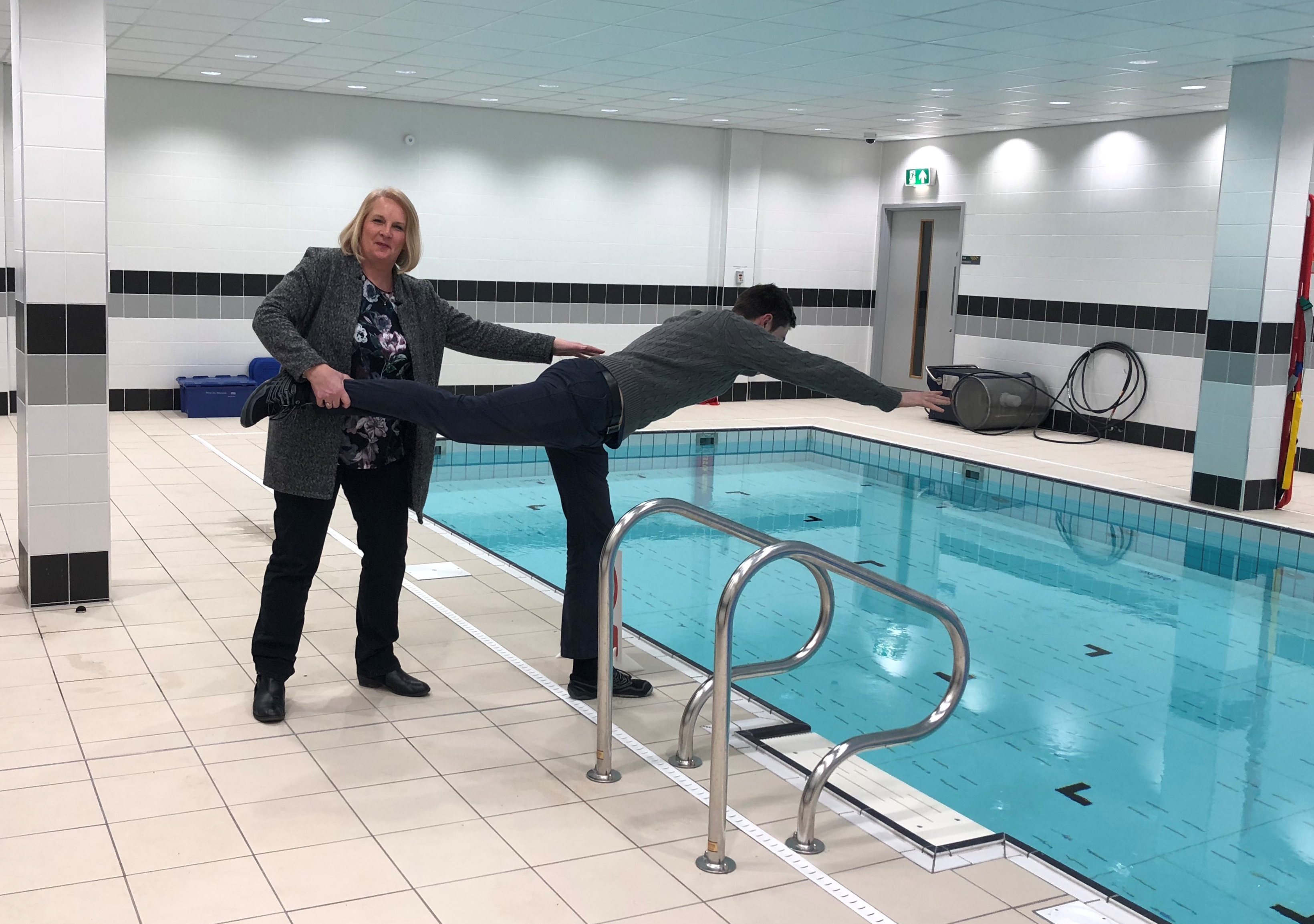
Hydrotherapy is the use of exercise in a heated pool to treat a variety of conditions. At David Ross Sports Village the state-of-the-art Hydropool is heated to between 33 and 38˚C, allowing your body to relax, encouraging pain relief, better circulation and improved flexibility.
Used by some of the top athletes in the country, hydrotherapy supports the recovery process following training and competitive fixtures. The brand new facilities are ideal for athletes and performance sports teams to meet the demands of modern sport. Aside from sports rehab and recovery, studies also show that hydrotherapy benefits patients rehabilitating from strokes, traumas, and other injuries as well as connective tissue diseases and asthma.
We have had a number of patients use the pool and we are wondering about organising a regular group session for clinic patients, if this is something that might interest you please can you leave your contact details and a preferred day/time with reception.
(No Chiropractors were harmed in the taking of the photograph!)
More